
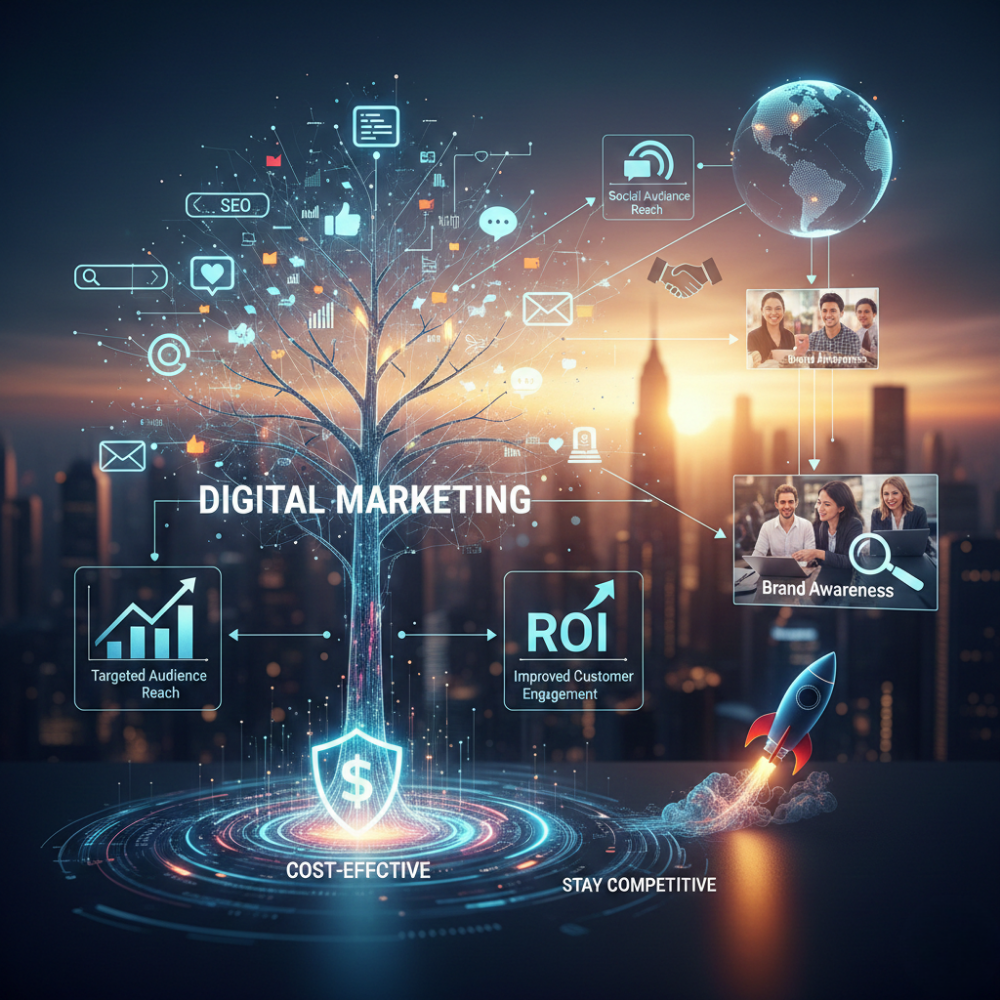
In today’s fast-paced and technology-driven world, businesses are constantly looking for new and innovative ways to reach their target audience, build brand awareness, and boost sales. Digital marketing has emerged as one of the most effective strategies for businesses of all sizes to achieve these goals. With the rise of the internet, social media platforms, and digital technologies, digital marketing has become an essential component of any business’s growth strategy.
Whether you’re running a small business or managing a large enterprise, digital marketing can help you stay ahead of the competition, engage with your customers, and drive your business forward. But how exactly does digital marketing benefit your business? In this blog post, we’ll explore the key advantages of digital marketing and how it can transform your business.
Table of Contents
Toggle1. Increased Online Visibility with Digital Marketing
One of the most significant benefits of digital marketing is its ability to increase your business’s online visibility. With more consumers turning to the internet to search for products and services, having a strong online presence is essential. Digital marketing allows you to reach your target audience through various online channels, including:
- Search Engine Optimization (SEO): By optimizing your website and content for search engines, you can increase your chances of appearing in search engine results pages (SERPs), making it easier for potential customers to find you.
- Social Media Marketing: Platforms like Facebook, Instagram, LinkedIn, and Twitter offer businesses a great opportunity to connect with their audience, engage with followers, and build brand loyalty.
- Email Marketing: Sending targeted and personalized emails to your subscribers can help you stay top of mind and drive repeat business.
Having a consistent online presence across multiple platforms helps establish credibility and trust, making it easier for potential customers to discover and connect with your business.
2. Cost-Effective Marketing with Digital Marketing
Traditional marketing methods, such as print advertising, TV commercials, and billboards, can be expensive, especially for small businesses with limited budgets. Digital marketing, on the other hand, offers a more cost-effective alternative. Many digital marketing tactics are either free or relatively low-cost compared to traditional methods. For example:
- Social Media Marketing: Creating social media profiles and posting organic content is free, and paid advertising on social platforms can be tailored to fit your budget.
- Content Marketing: Blogging, video marketing, and other forms of content marketing can be done on a small budget and can provide long-term value if done consistently.
- Email Marketing: Platforms like MailChimp and Constant Contact offer free plans for small businesses, allowing you to send emails to your customers without breaking the bank.
By using digital marketing, businesses can achieve significant results without spending large sums on traditional advertising.
3. Targeted Audience Reach through Digital Marketing
One of the most powerful aspects of digital marketing is its ability to target specific audiences. With digital marketing, businesses can focus on reaching the people who are most likely to be interested in their products or services. Here’s how it works:
- Social Media Ads: Social platforms offer robust targeting options that allow businesses to segment their audience based on factors like age, gender, location, interests, and behaviors. This ensures that your ads are shown to the people most likely to engage with your brand.
- Google Ads: Google’s pay-per-click (PPC) ads allow businesses to target specific keywords, making it easier to reach people who are actively searching for products or services like yours.
- Email Marketing: Email marketing allows you to send personalized messages to specific segments of your audience, based on their interests, behaviors, or purchase history.
By targeting the right audience, you increase the likelihood of converting leads into paying customers and achieving a higher return on investment (ROI) for your marketing efforts.
4. Improved Customer Engagement with Digital Marketing
Digital marketing provides businesses with numerous opportunities to engage with their customers in real-time. Whether it’s responding to customer inquiries on social media, sending personalized emails, or interacting through live chat on your website, digital marketing helps build meaningful relationships with your audience.
- Social Media Interaction: Social media platforms allow businesses to engage with their audience through comments, likes, shares, and direct messages. Responding to customer feedback, addressing concerns, and sharing valuable content can help foster a loyal customer base.
- Live Chat & Chatbots: Adding a live chat feature to your website allows visitors to ask questions and receive immediate responses. Additionally, chatbots can be used to automate customer service tasks, providing quick and accurate information to customers 24/7.
- Customer Reviews & Feedback: Digital marketing allows you to collect and showcase customer reviews, which can help build trust and credibility with potential customers.
By actively engaging with customers, you demonstrate that you value their input and care about their needs, which can lead to higher customer satisfaction and brand loyalty.
5. Measurable Results and Analytics in Digital Marketing
Another key advantage of digital marketing is the ability to track and measure your marketing efforts. Unlike traditional marketing, where it can be difficult to determine the effectiveness of your campaigns, digital marketing provides you with access to detailed analytics and performance data.
- Google Analytics: Google Analytics allows you to track website traffic, user behavior, conversion rates, and other key metrics, giving you valuable insights into how your website is performing and where improvements can be made.
- Social Media Insights: Social media platforms offer built-in analytics that show you how your posts are performing, including engagement rates, click-through rates, and audience demographics.
- Email Marketing Analytics: Email marketing platforms provide detailed reports on open rates, click-through rates, and conversions, allowing you to fine-tune your campaigns for better results.
By having access to this data, you can make informed decisions, optimize your strategies, and continually improve the effectiveness of your marketing campaigns.
6. Brand Awareness and Credibility through Digital Marketing
- Content Marketing: Publishing high-quality blog posts, videos, and infographics positions your business as an authority in your industry. By providing value to your audience, you build trust and credibility, making them more likely to choose your brand over competitors.
- Social Proof: Customer reviews, testimonials, and user-generated content are powerful tools for building trust with your audience. When potential customers see that others have had positive experiences with your brand, they are more likely to make a purchase.
7. Better ROI and Conversion Rates with Digital Marketing
- PPC Advertising: With Google Ads and other PPC platforms, businesses only pay when someone clicks on their ad, making it a cost-effective way to drive traffic to their website and increase conversions.
- Retargeting: Retargeting ads allow you to re-engage visitors who have previously interacted with your website but didn’t make a purchase. By reminding them of your products or services, you increase the chances of converting them into customers.
8. Stay Competitive in the Market
- Competitive Analysis: Digital marketing tools allow you to track your competitors’ activities, monitor their social media presence, and analyze their content strategy. This helps you identify opportunities for improvement and find ways to outperform your competition.
- Adapting to Trends: The digital landscape is constantly changing, with new technologies, platforms, and strategies emerging regularly. By staying up-to-date with digital marketing trends, you can position your business to take advantage of new opportunities and stay ahead of your competitors.
Conclusion
The benefits of digital marketing are vast and undeniable. It provides businesses with the tools they need to grow, reach new audiences, and build lasting relationships with customers. From increasing online visibility to offering targeted marketing, improving customer engagement, and providing measurable results, digital marketing helps businesses thrive in today’s competitive digital landscape.
In an era where digital is king, investing in digital marketing is no longer optional—it’s a crucial step toward ensuring the success and sustainability of your business. By adopting the right strategies and leveraging the power of digital marketing channels, businesses can achieve their goals, boost sales, enhance brand awareness, and stay ahead of the competition.
Whether you’re looking to expand your reach, improve customer engagement, or generate higher returns on investment, digital marketing is the key to success. If you haven’t yet embraced digital marketing, now is the time to invest and watch your business thrive in the digital age.
